Medicaid Field Research: Children’s Health Plan Website Optimization
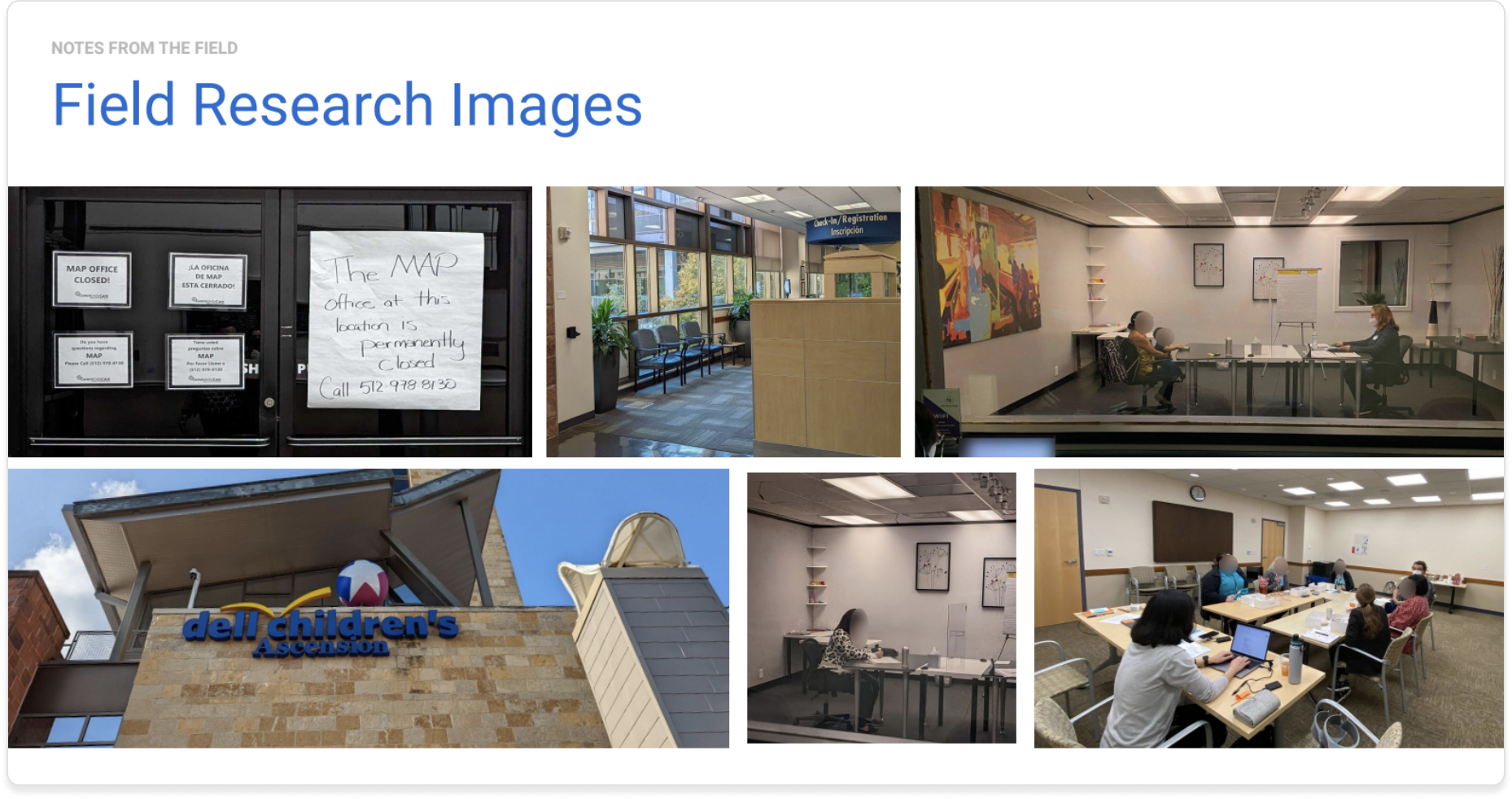
Research Purpose
Problem: Dell Children’s Health plans website needed to be updated to meet the standards of the states Medicaid program to ensure a bid for CHIP and STAR in the following year.
What Research was tasked with: Understand how current Dell Children’s Health Plan members engage with their plan, access care, and utilize any additional services to support their ability to be healthy. While additionally discovering how we can build trust, new programs and encourage plan selection.
What we did
Subject Matter Expert Research
Gather first hand knowledge and existing assumptions around the Medicaid population through 1:1 interviews and roundtable discussions with health plan stakeholders, Case Managers, and Social Workers.
Medicaid Participant Research
We engaged an outside recruiting company, Think Group Austin, to find us participants based on specific qualifications we were looking for. We conducted 12, 90-minute interviews including a stimuli activity, with men and women who were currently or soon to be parents and caregivers, and had actively received medical financial assistance.
We Discovered
Four
Observed Trends
Three Behavioral Archetypes
Fifteen Design and Service Opportunities
Four Observed Trends along the Medicaid journey
Clarity and Confidence in Communication
Can individuals easily identify who is communicating with them, if the message is credible and what next steps are?
Accessible value added benefits
Added benefits are enticing to members and potential members, but not if there is a blocker to access.
Trusted Access to Care
If an individuals child needs access to a specialist to prescribe a medication, how can they be sure their plan will offer access to one?
Distinction between State and Plan
The state itself offers an abundance of resources to individuals who need it, so if the state website is where they spend their time, why would individuals look elsewhere for resources?
Three Behavioral Archetypes
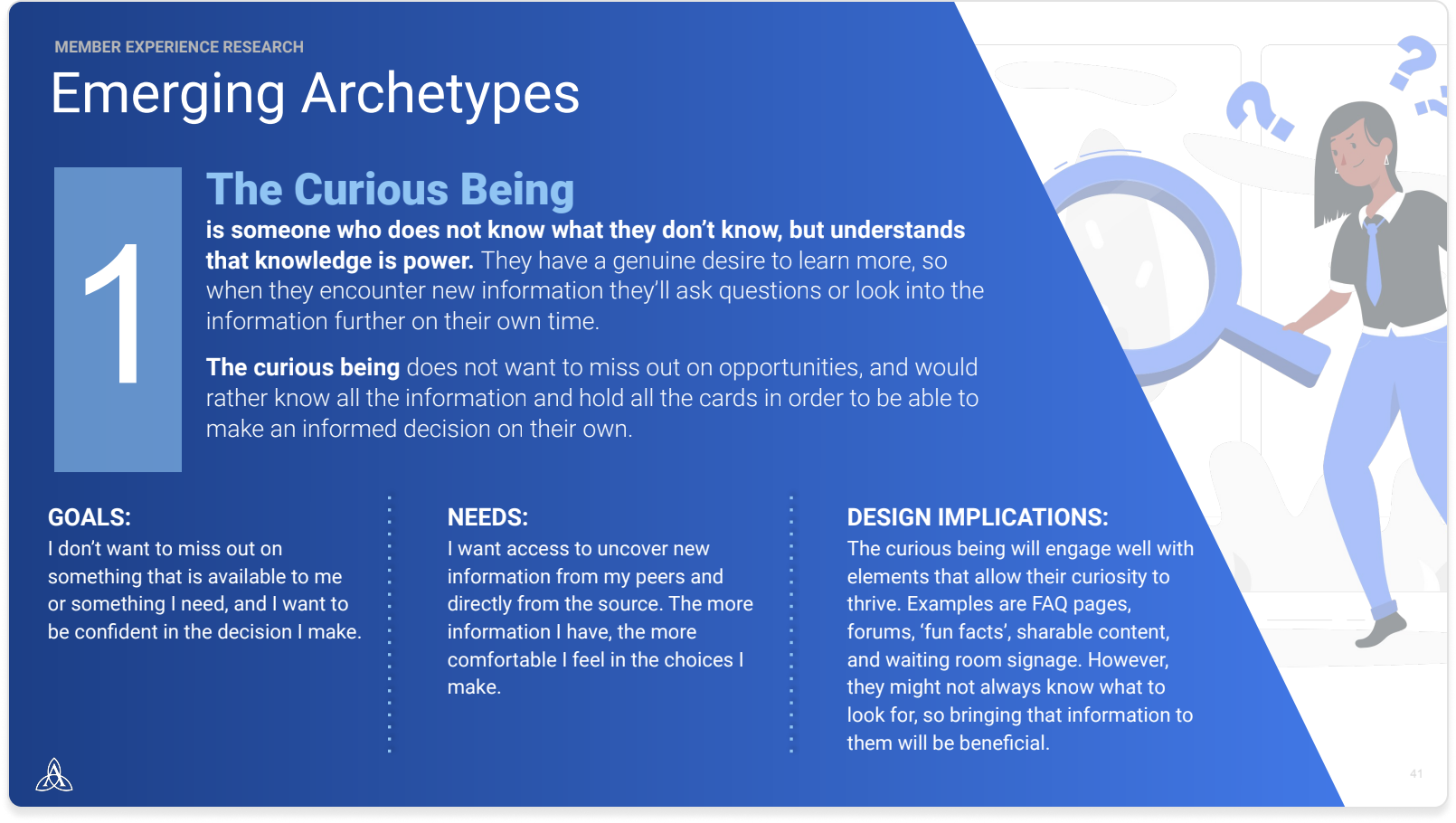
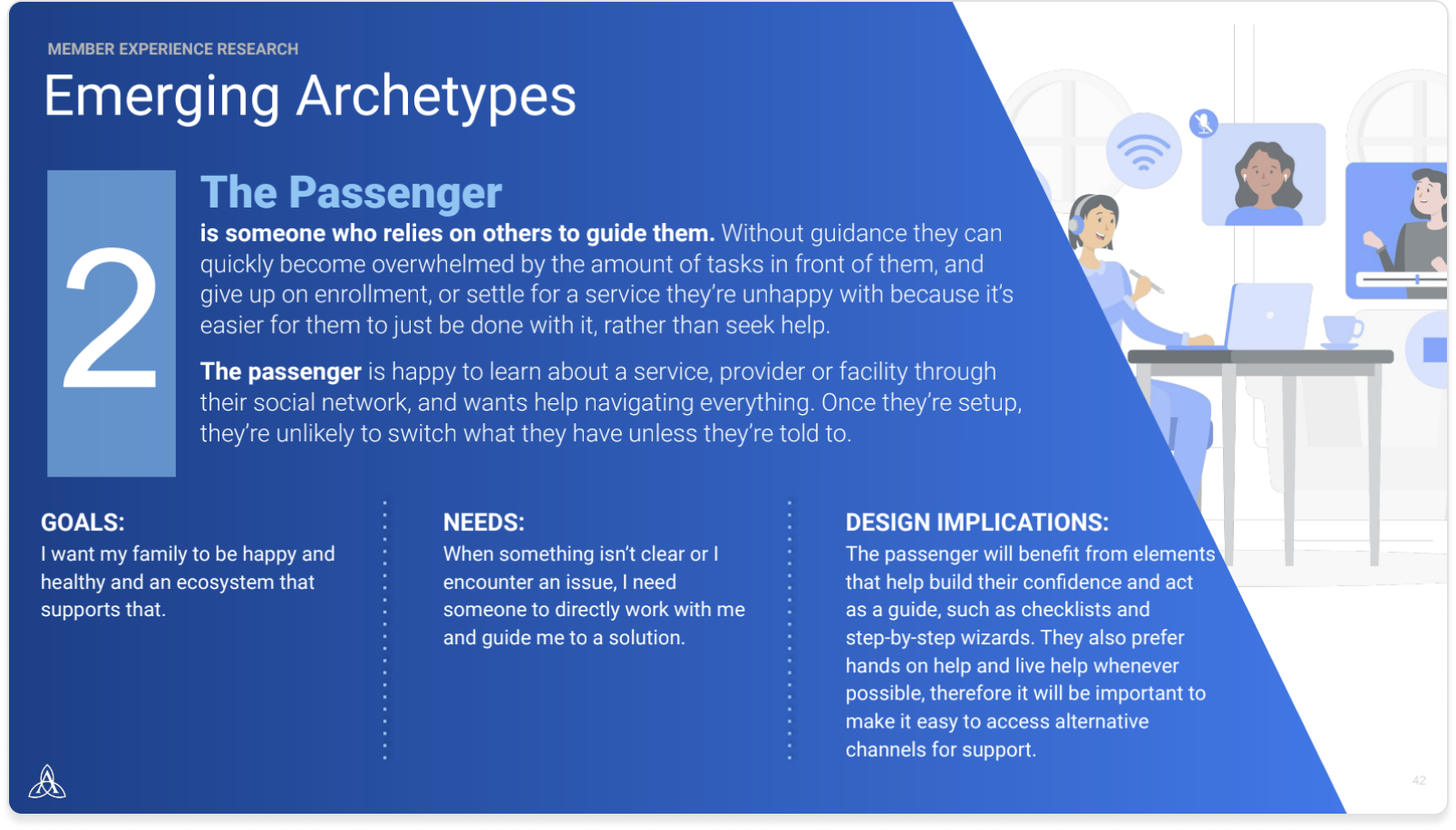
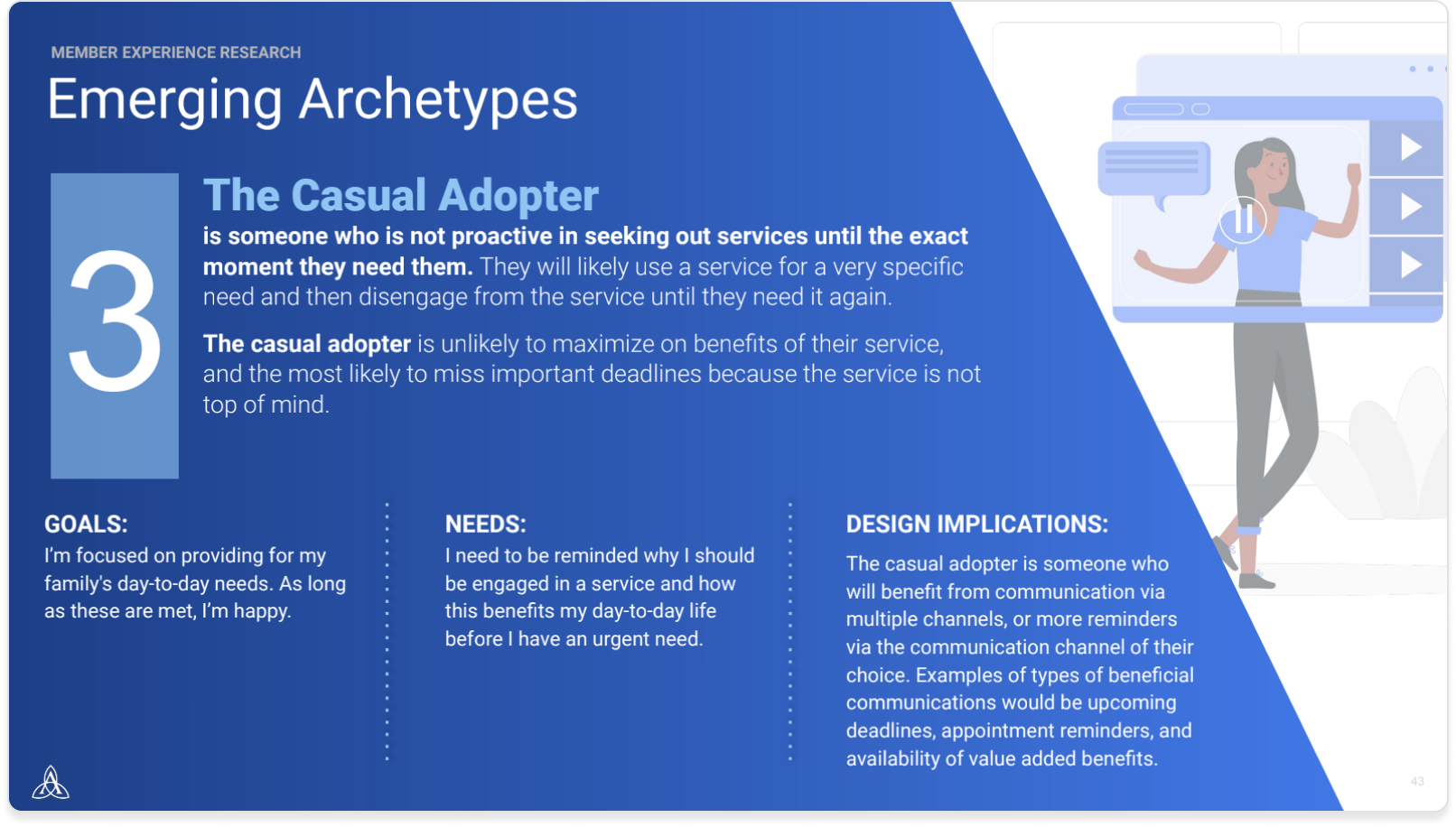
I personally put these behavioral archetypes together based on our findings. I’ve called them emerging archetypes, because they are based specifically on this research scope vs the larger Ascension ecosystem. I felt strongly that archetypes were a much better direction to go in vs. personas when addressing such a large and vulnerable population. Every archetype is intended to specifically call out the design implications of the archetype, so designers, product and stakeholders can think critically through how to apply insights.
Fifteen Design and Service Opportunities
The most important thing coming out of this project is “Okay now what?”
We identified four main categories for opportunity that aligned with our population and goals, with a total of fifteen areas for action that we shared with our large stakeholder team. At the end of our share-out we ensured that we held space to discuss what next steps might look like, and what to break up into now/next/later.
In the end:
After this share-out, the project from our end got put temporarily on hold. However the hospital DID win the bid for STAR and CHIP Medicaid in Texas!